

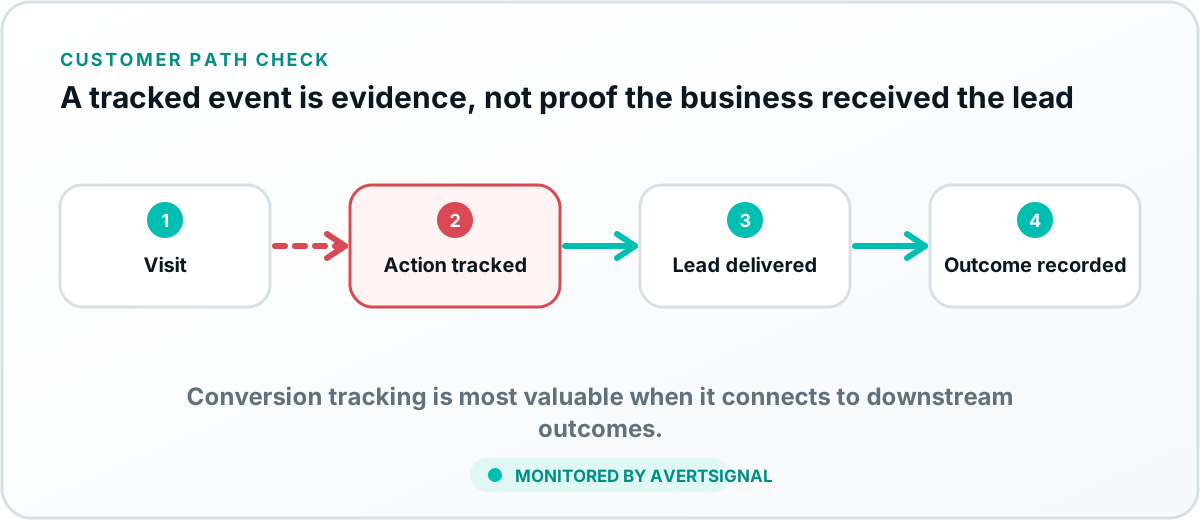
Conversion tracking is important because it connects marketing activity with meaningful actions such as calls, forms, bookings and purchases. It helps a business compare channels, campaigns and landing pages. Tracking does not by itself prove that the resulting lead reached the team, so important events should be verified against notifications and CRM delivery.
What conversion tracking does
Conversion tracking records actions that matter to the business. In Google Analytics, interactions are measured as events, and events that represent important business outcomes can be marked as key events. Advertising platforms use related signals for reporting and optimization.
Useful lead-generation conversions include completed forms, qualified calls, confirmed bookings, purchases and meaningful chat handoffs.
Why conversion tracking matters
Choose meaningful events
Do not mark every button click as a business conversion. Track the completed action or strongest observable success state. A click on “Book Now” is useful as a diagnostic event, while a confirmed appointment is a stronger business event.
Use recommended event names and parameters where they fit the business. Consistent implementation improves reporting and reduces custom-event clutter.
What conversion tracking cannot prove
An event can fire while the email notification fails. A call can be counted while nobody answers. A booking confirmation can be recorded while the appointment never reaches the staff calendar. Tracking measures a signal, not the complete operational outcome.
That is why end-to-end lead tracking includes notification, CRM delivery and ownership.
Why conversion tracking breaks
- Website deployments remove or duplicate tags.
- Form or booking platforms change their confirmation behavior.
- Event names or parameters no longer match reporting.
- Consent settings prevent expected measurement.
- Redirects or cross-domain handoffs lose attribution.
- Tag-manager changes are not published correctly.
- Multiple scripts fire the same event twice.
How to verify conversion events
- Use a clean or debug session.
- Complete the exact customer action.
- Confirm the event in real-time or debugging tools.
- Inspect the event name and important parameters.
- Confirm the event appears once under the correct condition.
- Compare it with the business notification and CRM record.
Preserve campaign attribution
Use consistent source, medium and campaign naming. Test redirects, third-party booking platforms and embedded forms to ensure campaign information reaches the final lead record when appropriate.
Build measurement with privacy in mind
Configure consent and data collection according to applicable requirements. Avoid sending personal information in event names, URLs or analytics parameters. Limit access and retention to what the business needs.
What a business owner should see
The useful view connects spend or traffic to meaningful actions, delivered leads, pipeline and customers. It also identifies when tracking is impaired or uncertain so the owner does not make budget decisions from incomplete evidence.
How AvertSignal monitors conversion signals
AvertSignal is designed to monitor important tracking signals and compare them with the customer actions and lead-delivery outcomes they represent. It does not replace analytics. It helps reveal when the measurement or the underlying path stops working.
Sources and further reading
Conversion event versus CRM evidence
A measured conversion does not prove the lead or source survived.
If analytics and CRM totals disagree, compare the event definition, form acceptance, integration, duplicate handling, timestamps, and exact records. Use the analytics-to-CRM reconciliation guide before changing attribution settings.